By Hannah Nuss
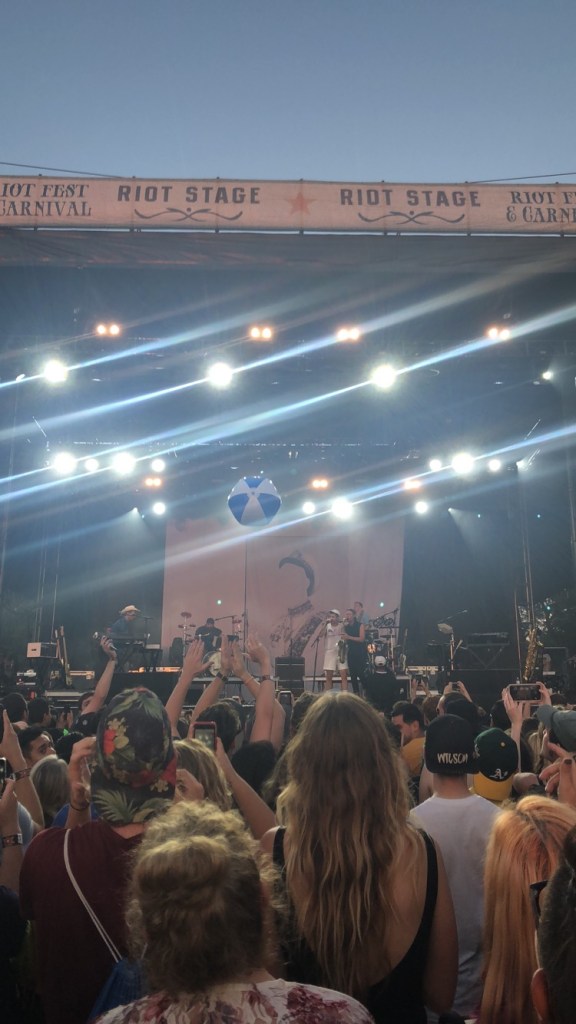
One year ago today, I attended Riot Fest in Chicago for the first time. With a three-day lineup complete with metal and punk, it was a surprise to me when the band that got me most excited was an indie-rock group from New Jersey.
Bleachers is monumental, both in striking a personal chord with honest lyrics, and in front man, Jack Antonoff’s, variable success as a song writer for artists such as Taylor Swift and Sia. Antonoff rose to mild fame through his launching the similar rock group Steel Train, and later on being an instrumentalist for the band Fun. Fun saw the sun through hits such as “We Are Young,” a radio-friendly pop anthem about tropes of being reckless as a young person.
Antonoff quit Fun. In 2014, expressing in interviews that he didn’t want to be thirty years old and still playing guitar for “We Are Young,” he wanted to keep going. One-hit wonder recognition isn’t the end game for him. So he formed Bleachers.
Bleachers, unlike Fun., features Antonoff on the vocals along with a plethora of other instruments he writes for. The song that first brought Bleachers to the limelight was the visceral anthem “I Wanna Get Better,” written about the loss of his sister but relevant to listeners everywhere, relishing in the imagery of:
 Woke up this morning early before my family
 From this dream where she was trying to show me
 How a life can move from the darkness
 She said to get better
 So I put a bullet where I shoulda put a helmet
 And I crash my car 'cause I wanna get carried away
 That's why I'm standing on the overpass screaming at myself
 Hey, I wanna get better!
Many of Antonoff’s original songs recorded by Bleachers feel uniquely raw to young fans, who all to easily are able to point to the discography and say with pain and pride I’ve felt like this too.
Thus brings me back to why, at a festival known for it’s punk ties and chaotic sets, was I the most electrified by an indie-rock group. The answer: Antonoff’s message. His use of music to examine what’s too hard to confront and staring it in the face anyway.
The song that sent me through the stratosphere was the hit single from their latest album, “Don’t Take the Money.” Antonoff has expressed that out of any song he’s ever written (and there have been plenty) that this is the one that he poured the most of himself into. The song is about refusing to settle, to give into giving up on something or someone just because it’s the easiest option.
In a moment of spoken-word realness, as if taking a break from the melody to reason with the listener, to express hey, I’m serious about this, Antonoff preaches:
 When you're looking at your shadow
 Standing on the edge of yourself
 Praying on the darkness
 Just don't take the money

 Dreaming of an easy
 Waking up without weight now
 And you're looking at the heartless
 Just don't take the money
To many, this song is about now giving up, a simple yet tired ounce of advice. In my mind a year ago at Riot Fest and today as I belt it in my car, it runs deeper than that. This song is about forcing a reminder onto yourself that just because youre comfortable doesn’t mean youre okay. Every time it plays on shuffle, I’m reminded the person or thing or memory that causes you pain isn’t the enemy, rather, the enemy is apathy.

 HAVOC MUSIC